


About Us
Home
/
About Us
/
Study
About Us
Study
2026/07/06
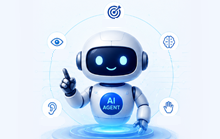
AI Agent is an intelligent system with goal-driven and autonomous action capabilities. By combining Large Language Models (LLMs) with external tools, it can automatically complete tasks across multiple systems. Unlike traditional conversational AI, which can only respond passively to user queries, AI Agents possess planning, memory, and tool-use capabilities, enabling them to independently break down tasks and execute them autonomously. Simply put, if an LLM is the "brain" of AI, then an AI Agent is a complete intelligent entity equipped with "eyes, ears, hands, and feet." According to NSE Technical Insights, an AI Agent requires three core capabilities: Planning, Memory, and Tool Use & Perception. These capabilities enable AI to evolve from merely "talking" to actually "getting things done," making it a truly intelligent autonomous agent.
2026/06/05
Introduction: Voice as the Next Gateway to Human–Computer Interaction
In recent years, artificial intelligence technologies have advanced rapidly, with speech technologies experiencing particularly remarkable growth.
In the past, human-computer interaction primarily relied on keyboards, mice, and touch interfaces. However, with the rise of Large Language Models (LLMs) and Generative AI,
voice has gradually become a key entry point for the next generation of human-computer interaction.
Whether in intelligent customer service, voice assistants, real-time translation, online education, or even virtual digital humans,
two core technologies play a critical role behind the scenes: Speech-to-Text (STT) and Text-to-Speech (TTS).
The primary function of STT is to convert spoken language into text, while TTS is responsible for transforming text into natural and fluent speech.
Traditionally, these two technologies were treated as separate systems. However, with the development of Generative AI, STT, LLMs, and TTS have gradually converged,
forming a complete Voice AI Agent architecture that enables artificial intelligence not only to hear human speech but also to understand its meaning and respond naturally through voice.
This transformation is redefining the future of human-computer interaction.
2026/05/12
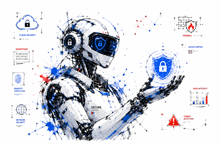
As cloud customer service and AI applications become increasingly widespread, enterprises are no longer concerned only with whether a platform is powerful enough, but whether their data is truly secure. For contact centers, call recordings, chat histories, identity information, and payment data may all be centralized on the same platform. Once controls are inadequate, the risks can impact not only operations but also directly damage brand trust. Genesys has designed its data security and protection framework around one core principle: enabling enterprises to confidently place critical customer data in the cloud. Through encryption, access control, isolation, compliance, and AI governance, it establishes a comprehensive line of defense.

2026/04/09
In today’s rapidly advancing world of AI and automation, many people fear that machines will replace human jobs. Scenes of robotic arms swinging across factory assembly lines and chatbots taking over customer service centers have left frontline workers feeling uneasy. However, the true purpose of automation is not to eliminate human labor, but to usher in a new era of human–machine collaboration. Through intelligent division of labor, companies can unlock the real value of frontline employees—freeing them from repetitive tasks and enabling them to focus on high-value, creative work. This not only boosts productivity but also reshapes the future of work.
2026/03/09
Imagine you hired two assistants.
The first assistant is extremely knowledgeable. When you ask, “How should I plan a five-day autumn foliage trip to Kyoto?” he instantly produces a perfect itinerary, even adding historical anecdotes along the way.But when you say, “Great, now help me book the flights and hotels,” he politely replies:“Sorry, I’m just a language model and cannot access the internet to perform actions for you.”
The second assistant, however, not only gives you advice but also opens a browser, compares prices across hotel booking platforms, checks your calendar availability, pays for the tickets with your card, and finally sends the confirmation email to your inbox.
This illustrates the gap between ChatGPT (Large Language Models, LLMs) and AI Agents.
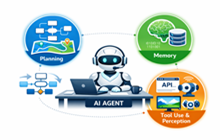
If an LLM is the “brain” filled with human knowledge, then an AI Agent is a complete organism equipped with eyes, ears, hands, and feet.
For AI to evolve from simply “talking” to actually “taking action,” it must master three core capabilities:Planning、Memory、Tool Use & Perception.

2026/02/06
Early large language models (LLMs) were a bit like erudite scholars locked in a room. They had read vast amounts of information and could write essays, explain concepts, and reason through problems—but they had one fatal limitation: they could only “think,” not actually “do.”
They couldn’t access real-time data, call systems, operate databases, or truly help you send an email, create a ticket, or check an account. As a result, a very clear gap emerged—
LLMs advanced rapidly in understanding and expression, yet were almost helpless when it came to executing real-world tasks.
This situation began to be fundamentally rewritten with the emergence of Tool Calling.
2026/01/12
Over the past decade, the development of enterprise AI has largely been confined to “unimodal” systems. Text-based AI handled documents and chat; voice AI focused on transcription and customer service calls; vision AI concentrated on security surveillance. Yet humans have never perceived the world through a single channel. When we communicate, we simultaneously hear the voice (audio), observe expressions and movements (vision), and interpret words (text).
With the maturation of Multimodal Large Language Models (MLLMs), enterprises are officially entering an era of sensory fusion. This is not merely a stacking of technologies, but a revolution in perceptual capability.

2025/12/03
Preface: AI is Entering an Era Beyond Single-Mode Perception
One of the major breakthroughs in AI is the evolution from processing only a single type of data (such as text, images, or audio) to understanding and generating multiple forms of information simultaneously—known as Multimodal AI.
This capability makes AI’s perception closer to that of humans and is driving customer service forward from “passive response” to a new milestone of “proactive sensing and empathy.”

2025/11/06
Since the emergence of large language models (LLMs), we’ve witnessed their astonishing capabilities in text generation, summarization, and Q&A. However, no matter how intelligent these models are, they mostly remain at the “chatbot” stage—passively responding to queries, relying on static training data, and lacking the ability to interact with the real world.
Imagine telling an AI:“Check our CRM system for last month’s top-performing customer and automatically send them a thank-you email.” If the AI replies:“I’m sorry, I don’t have access to your CRM system or email tools,” its usefulness would be greatly diminished.
To bridge this gap between AI and real-world action, the tech community introduced a groundbreaking open standard — the Model Context Protocol (MCP). MCP effectively gives LLMs “hands and feet,” transforming them from knowledge conveyors into proactive, task-executing “AI Agents. ”

2025/10/08
As AI penetrates across industries, architectural choices are no longer a simple opposition between cloud and on-premise deployments. Instead, they represent a multidimensional trade-off involving performance, latency, privacy, maintainability, cost, and scalability. For technical architects, this is not merely a deployment strategy—it is a long-term business decision.

